


%20(1).png)
The entertainment industry still relies on a significant amount of manual work and time-consuming communication when it comes to casting. From selecting candidates to coordinating auditions, casting teams often spend considerable time communicating between production companies and talent agencies.
Tomobi is tackling these challenges by using technology to streamline the casting process and reduce the workload of casting professionals. They provide a digital platform designed for casting professionals; supporting the entire casting workflow, from matching candidates and managing audition schedules to maintaining a database of talent information.
Co-founder and CEO Ramon Haaf is an entrepreneur who built his career as a casting director in Japan’s entertainment industry. Through his work, he experienced firsthand how much less digitized Japan’s casting industry was compared with Europe and the United States, as well as the inefficiencies involved in day-to-day casting operations. These experiences led him to launch Tomobi.
Today, Tomobi is working to transform casting in Japan’s entertainment industry with the support of Shibuya Startup Support (SSS), including its Startup Visa program and hands-on support.
In this interview, Ramon shares what led him to start his own company, why he chose Japan as the place to build his business, his journey toward obtaining the Startup Visa, and how he has benefited from SSS’s hands-on support.
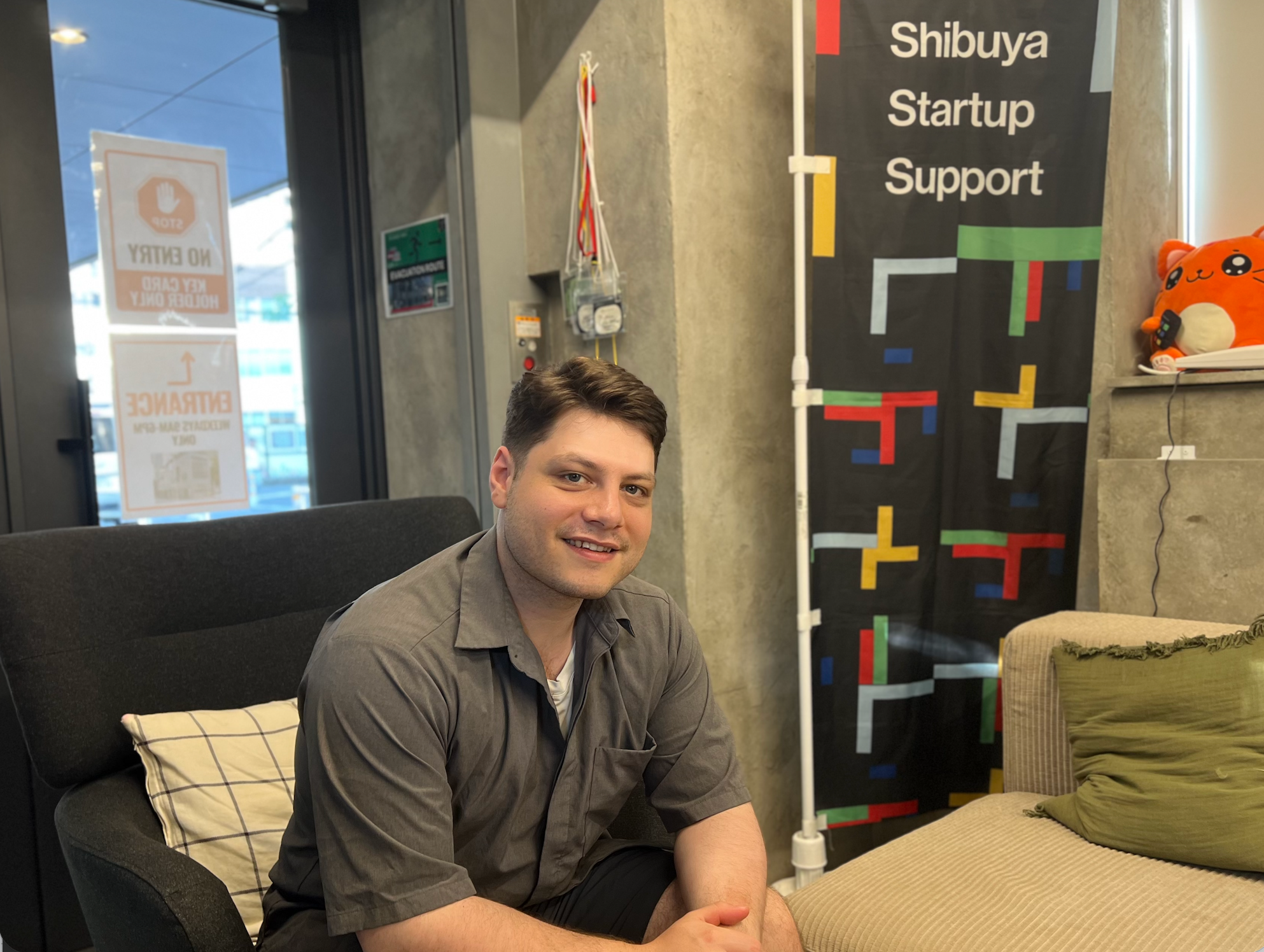
— First, could you introduce yourself and tell us about your business?
Ramon: My name is Ramon Haaf. Although my last name is “Haaf,” I’m actually fully German, and I came to Japan about eight years ago.
*In Japan, the term “half” (pronounced hāfu) is commonly used to describe a person of mixed heritage.
I’m the co-founder and CEO of Tomobi, where we are developing a digital platform for casting professionals.
I originally worked as a casting director, primarily handling Japanese casting for international co-productions, as well as foreign talent casting for projects in Japan.
There are services designed to support casting professionals in Europe and the United States, but they are still relatively uncommon in Japan. In Japan’s casting industry, it is common for casting professionals to contact talent agency managers directly by phone or email for each individual project and ask them to submit video profiles and other information about potential candidates.
I found this workflow extremely outdated and time-consuming. That firsthand experience made me think, “there must be a more convenient way to do this.” That became the starting point for the business we are building today.
— Why did you choose Japan, and specifically Tokyo and Shibuya, as the place to start your business?
Ramon: First of all, I had already built my career in casting in Japan. Another reason is that there are still relatively few tools supporting casting operations across Asia.
Tokyo is also the center of activity for the media industry, and Shibuya is home to many talent agencies, casting companies, broadcasters, and other companies involved in the entertainment industry. I felt that Shibuya was a natural fit for our business.
— What kind of network do you have with the casting industry outside Japan?
Ramon: I originally built my career mainly around Hollywood productions, so I have continued to exchange information with teams in the United States. More recently, I have also been involved in international co-productions in countries such as the United Kingdom.
I also have connections with the Casting Society of America (CSA).
— It sounds like you have built a diverse network over the course of your career.
Ramon: Yes. Through my career and the many people I’ve met along the way, I’ve been able to build a strong network.
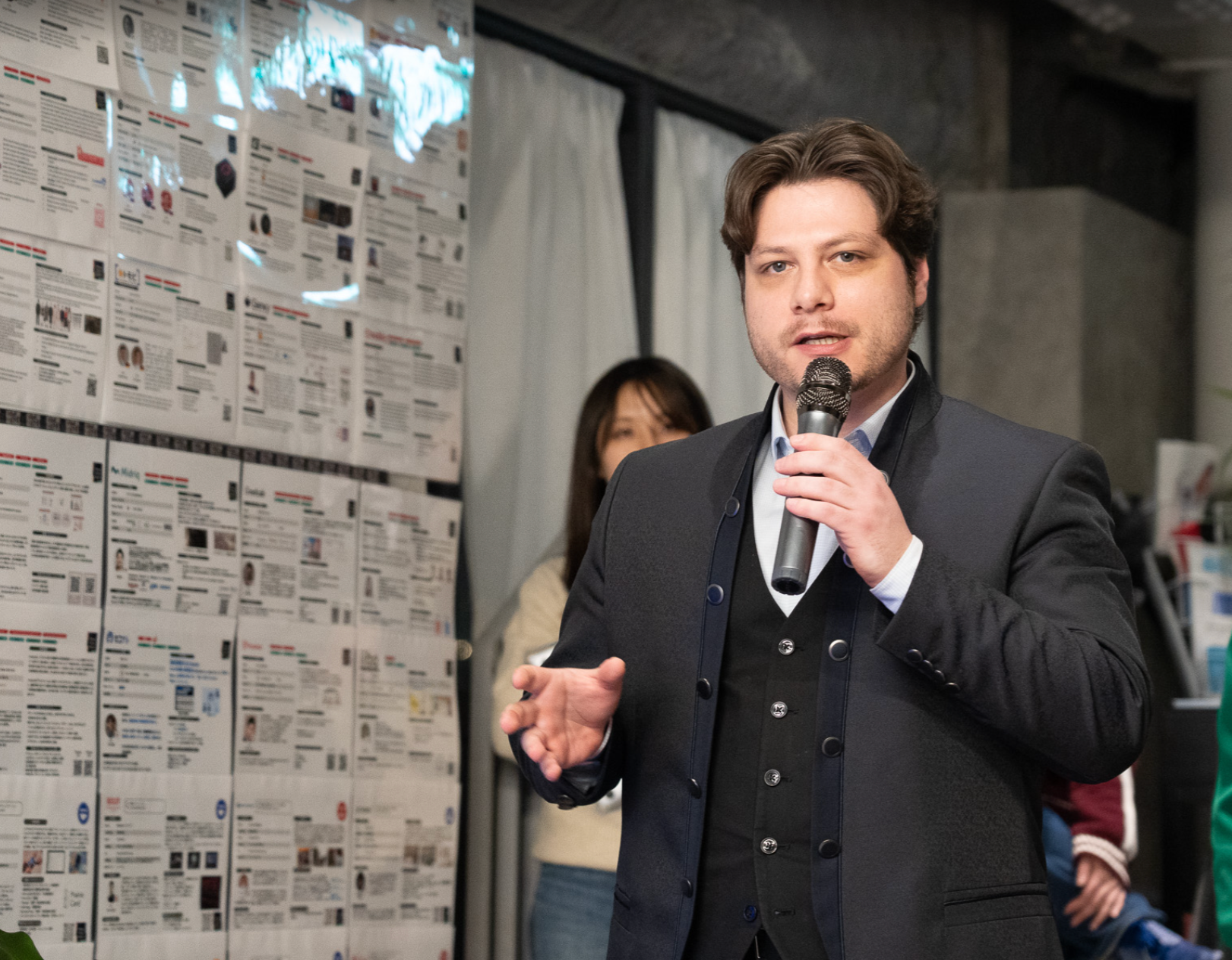
— As a foreign entrepreneur starting a business in Japan, one of the first challenges you had to overcome was obtaining a visa. How did you go about obtaining the Startup Visa?
Ramon: Originally, I obtained a Designated Activities visa while looking for a job in Japan and was planning to pursue employment opportunities. At the same time, I had a strong desire to start my own business.
Everyone has a different perspective on work and what they want from their career. For me, I’ve always wanted to do work that I genuinely enjoy. I wanted to work in media and film, but there are relatively few opportunities in those fields, and I also felt that finding a job in Japan as a foreigner would be challenging. So I decided that, rather than looking for a job, I would start a business based on an idea that I genuinely found interesting and enjoyable.
That was when I learned about the Startup Visa and began preparing my application.
At the time, I had only recently graduated from university and did not have enough capital to meet the requirements for a Business Manager visa. As a result, the Startup Visa was the most viable option for me.
— We understand that it has been about a year since you obtained the Startup Visa through Shibuya City. What are your plans for your visa going forward?
Ramon: The Startup Visa allows entrepreneurs to stay in Japan for up to two years.* I have now completed my first year and finished the renewal process, so I expect to be able to stay in Japan for another year under the Startup Visa.
After the Startup Visa expires, if I want to continue operating my business in Japan, I will need to switch to another status of residence, such as a Business Manager visa.
The requirements for the Business Manager visa were revised and made stricter in October 2025, making it more challenging for many foreign entrepreneurs to qualify.
That said, we have just launched our service and already have our first customers, so I’m optimistic about what comes next.
*For more information about the Startup Visa, visit this page.
— So it is important to carefully check the requirements for both the Startup Visa and Business Manager visa.
Ramon: Exactly. I’m also still within the eligible age range for a Working Holiday visa, but I need to think carefully about which visa to obtain and when, so that it doesn’t affect my plans to stay and build my business in Japan in the long term.

— Let’s talk about your business activities in Japan. You work closely with Japanese production companies, talent agencies, and casting companies, and as a startup founder, you presumably also have many meetings with investors. How have you found communication with Japanese companies and investors?
Ramon: One challenge is that there can be a mismatch between the stage of business that Japanese VCs are looking for and the current stage of Tomobi.
Another challenge is that decision-making can take a very long time. In other countries, a discussion might move forward within a few months, whereas in Japan, it can continue for a very long time. For example, we had been discussing a potential collaboration with one company for more than a year, but ultimately it did not work out.
Of course, having these discussions with Japanese companies is valuable, but the amount of time they can take is definitely a challenge.
— Do you feel that being a foreigner can sometimes be a barrier when doing business in Japan?
Ramon: At first, I thought Japanese clients might be hesitant to work with me because I’m a foreigner. I was concerned that the Japanese entertainment industry might not readily accept a foreigner like me.
In reality, however, being a foreigner can sometimes make people more interested in what I’m doing. I often hear things like, “we want to promote Japanese talent overseas,” or, “we want to take Japanese content to international markets.”
I speak Japanese, and I also have a network of international film and production companies. I believe there is an opportunity in combining these strengths.
Some fellow entrepreneurs have told me that, particularly when working with large Japanese companies, it can be difficult to build trust because you are not Japanese. Regardless of nationality, I hope more Japanese companies will continue to engage with foreign entrepreneurs on an equal footing.
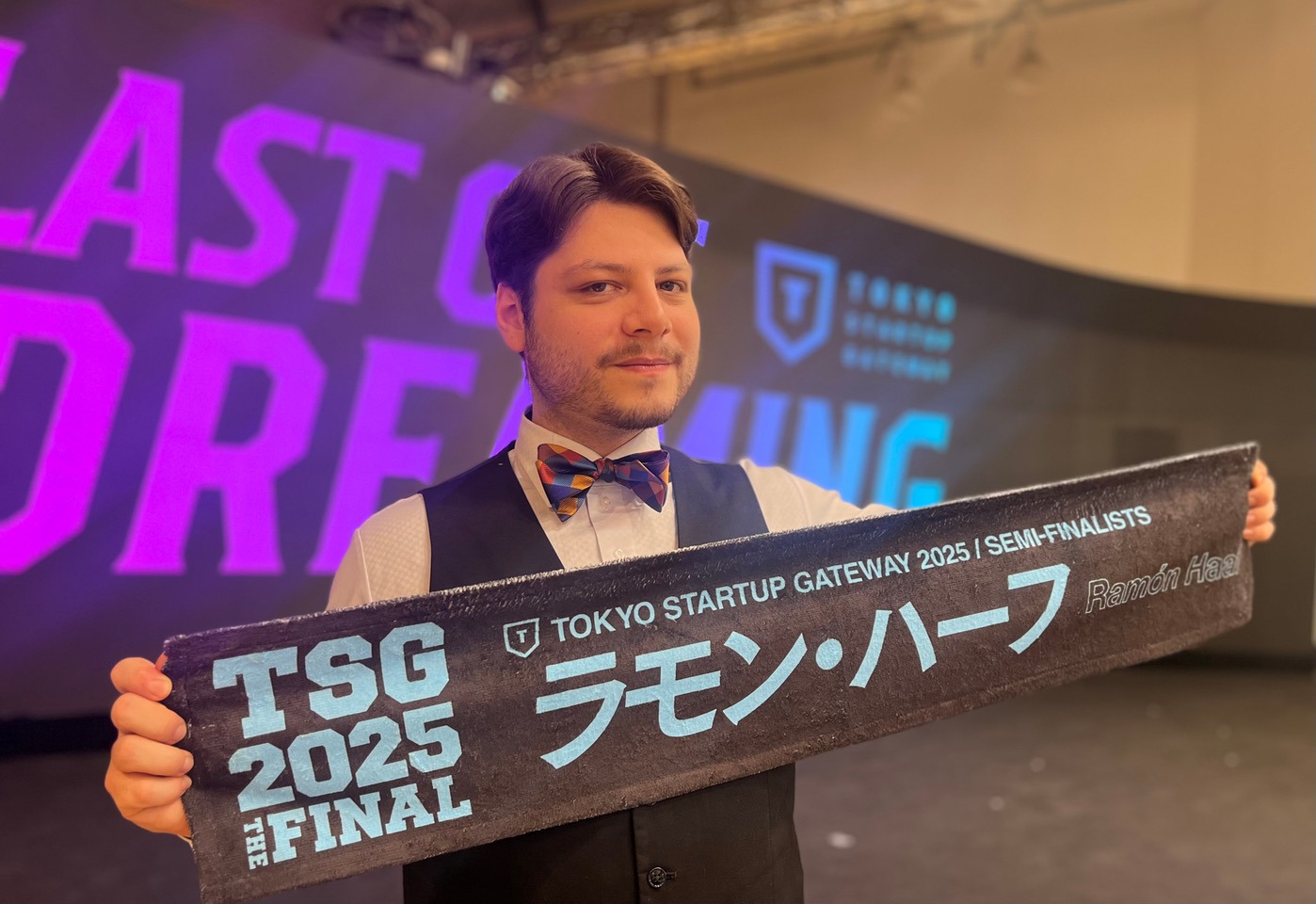
— SSS provides hands-on support to foreign entrepreneurs who receive the Startup Visa. Could you tell us what kinds of support have been particularly useful to you?
Ramon: Through the business mentoring program, I have been working with Kenji Fujita, who has extensive experience mentoring startups. He has given me broad guidance on business and management strategy. I’m also very grateful for the opportunities to build new connections by participating in community events organized by SSS.
But ultimately, the biggest support has been the assistance I’ve received through the Startup Visa program.
— It sounds like you have been making full use of the support available through SSS, including the mentoring program.
Ramon: Yes. Being part of SSS is really enjoyable.
It’s also great to be able to meet and connect in person at Shibuya Bridge with other entrepreneurs who have similar backgrounds and experiences.
— How would you like to grow the business in Japan going forward?
Ramon: We recently launched our service, so our immediate goal is to have more production companies and casting companies use the platform. We are also planning to release a casting support tool for talent and talent agencies in the near future.
We want many talented individuals to register and use the platform. Once we have built a sufficiently large database of talent information, we would like to connect it with talent databases overseas.
Ultimately, we want to build a talent database and potentially a marketplace for film-related work across Asia. Our vision is to create a platform that connects the entertainment industries not only in Japan, but also across countries such as South Korea, China, and Taiwan.
— Finally, do you have any message or advice for our readers?
Ramon: The people at SSS are very welcoming, and they respond carefully and quickly.
For anyone who is planning to start a business in Japan, I would encourage you to visit SSS and consider applying for support programs for foreign entrepreneurs, including the Startup Visa.
Doing business in Japan can be challenging at times, but I believe that if you work hard while pursuing something you genuinely want to do, the results will follow.
I wish you the best of luck.
— From Japan to Asia, and eventually to the world. Thank you very much for sharing the story behind Tomobi’s vision for transforming the casting industry through technology, and your journey as an entrepreneur building a business from Shibuya.
Interview & Article by Keito Okabe
Editing by SHIBUYA STARTUP SUPPORT PR Team
Shibuya Startup Support: https://shibuya-startup-support.jp/
Shibuya Startup SupportLinkedIn: https://www.linkedin.com/company/shibuya-startup-support/
Facebook: https://www.facebook.com/shibuya.startup.support
X: http://twitter.com/ShibuyaStartup


