


.png)
Japan’s logistics industry is facing growing challenges, including a shortage of truck drivers and increasing demand for deliveries. Improving logistics efficiency has therefore become an increasingly important issue.
Logistical Inc. is tackling this challenge by focusing on one often-overlooked resource: the unused space inside delivery trucks.
The company provides a volume detection system that enables logistics companies to identify available space inside trucks in real time. By sharing this information with other companies, Logistical is building a system that allows multiple companies to make better use of unused truck capacity.
By improving truck utilization rates, the company aims to address labor shortages and inefficiencies across Japan’s logistics industry.
For this interview, we spoke with Shahboz (Shaha) Khairulloev, Founder and CEO of Logistical. He shared the story behind the company’s current business model, his experience obtaining a visa as a foreign entrepreneur, and how Shibuya Startup Support (SSS) has supported him from launching his company to growing the business.

— First, could you introduce yourself and tell us about your business?
Shaha: My name is Shaha. I’m originally from Uzbekistan, and this year marks my seventh year living in Japan.
Together with my co-founder, Navtej Dhot, I founded Logistical Inc. in September 2024.
At Logistical, we are working to address the underutilization of truck capacity in Japan’s logistics industry.
Currently, the average truck utilization rate in Japan remains below 40%. In other words, many trucks are traveling with more than half of their available space empty.
That’s why Logistical provides a volume detection system that identifies unused space inside trucks and enables that information to be shared with other logistics companies.
For example, imagine two companies delivering goods to the same location. One truck is only 40% full, while another is 60% full. Traditionally, they would make separate deliveries. With our platform, however, their shipments could potentially be combined into a single truck.
This can help reduce logistics costs while also addressing the shortage of truck drivers and improving operational efficiency.
— What initially sparked your interest in logistics?
Shaha: Before starting Logistical, I worked on a project supporting foreigners living in Japan with moving services. That was what first got me interested in logistics.
For foreigners, using moving services in Japan is not always easy. Many services are provided only in Japanese, there can be additional fees, and moving services in Japan are more expensive than in many other countries.
So I created and operated a platform that matched people looking to move with freelance drivers who owned their own trucks.
While working on that project, I had opportunities to speak with logistics and moving companies and learned that there were some very significant challenges in the logistics industry.
I believe startups exist to solve big problems. When I learned about this particular problem, I thought, “I have to solve this.”
At the same time, I felt that if we could solve it, there was also an opportunity to build a significant business as a startup.
— Why did you decide to start your business in Japan, and specifically in Tokyo and Shibuya?
Shaha: I came to Japan as a university student and attended a university here.
After graduating, I wasn’t considering working for a traditional company. Ever since I was a child, I had wanted to start my own business someday.
During my fourth year of university, I joined JVA (Japan Venture Academy), a networking and learning program for university students and international students interested in entrepreneurship.
Through the program, I learned about startups, and the project I mentioned earlier was also born through activities with JVA.
Later, I learned that JVA was supported by Shibuya City, which led me to connect with SSS, another initiative supported by Shibuya City. That was when I became interested in the Startup Visa and the possibility of starting a business in Japan.
When I initially applied to SSS, my business idea was quite different from what we are doing today. It was closer to a B2C matching platform. However, as I learned more about the logistics industry, we pivoted toward a B2B business model.
I originally came to Japan to study at university, but I really like Japanese culture and feel that the quality of life here is very high.
Of course, I could have returned to Uzbekistan after graduating from university. But I had found an important problem in Japan’s logistics industry that I wanted to solve, so I decided to build my startup here.
I don’t think there is much point in starting a startup if there isn’t a problem that needs to be solved.
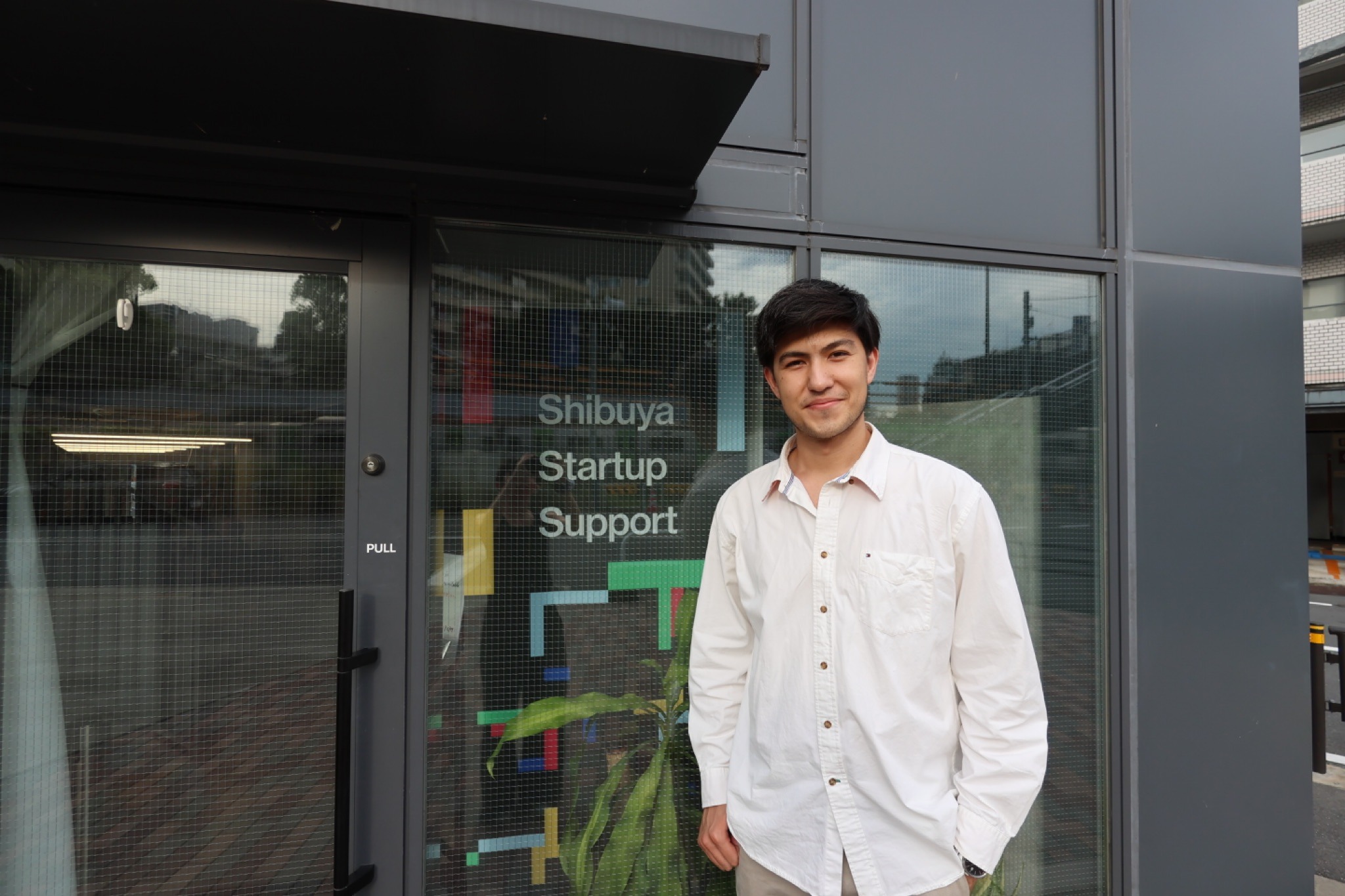
— Could you tell us about your current visa status?
Shaha: I obtained the Startup Visa in 2023, and the following year I switched to a Business Manager visa. SSS also provided a lot of support during that process.
Specifically, they supported me with establishing the company and opening a corporate bank account, which enabled me to complete the procedures required to apply for the Business Manager visa.
— Did you face any particular challenges when applying for the Business Manager visa?
Shaha: At the time, I don’t think the requirements were as difficult as they are now. But if I hadn’t participated in the SSS program, I think the process would have been much more challenging.
Even setting up the company itself, as well as opening a bank account, felt difficult to me. The support I received from SSS with these procedures helped me build the foundation for my business.
They also connected me with various people and organizations that could provide information and guidance about the application process, including other entrepreneurs who were working toward obtaining their visas and people at banks.
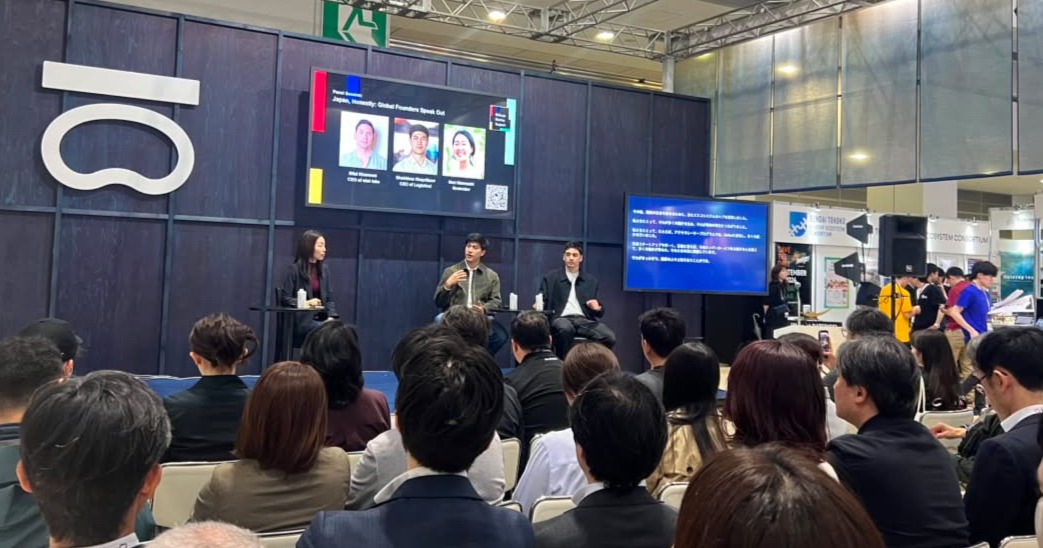
— Of the various types of support provided by SSS, which have been particularly valuable to you?
Shaha: First of all, the fact that I was able to take on entrepreneurship with comprehensive support from SSS, even though I had just graduated from university and had very little experience or financial resources, was incredibly important to me.
Having the backing of the government also gave me a sense of security when starting the business.
I also think I am one of the people who makes the most use of the SSS network. Being introduced to people who can help us grow the business has been a huge source of support.
I also remember some of the more detailed, hands-on support. When I had just started the company, there were many things I didn’t know about doing business in Japan, such as how to write professional emails and how to behave in business meetings. Someone who worked at SSS at the time carefully taught me how to write emails, and even joined several business meetings with me.
For someone like me who had just graduated from university and knew very little about the basics of business, that was incredibly reassuring.
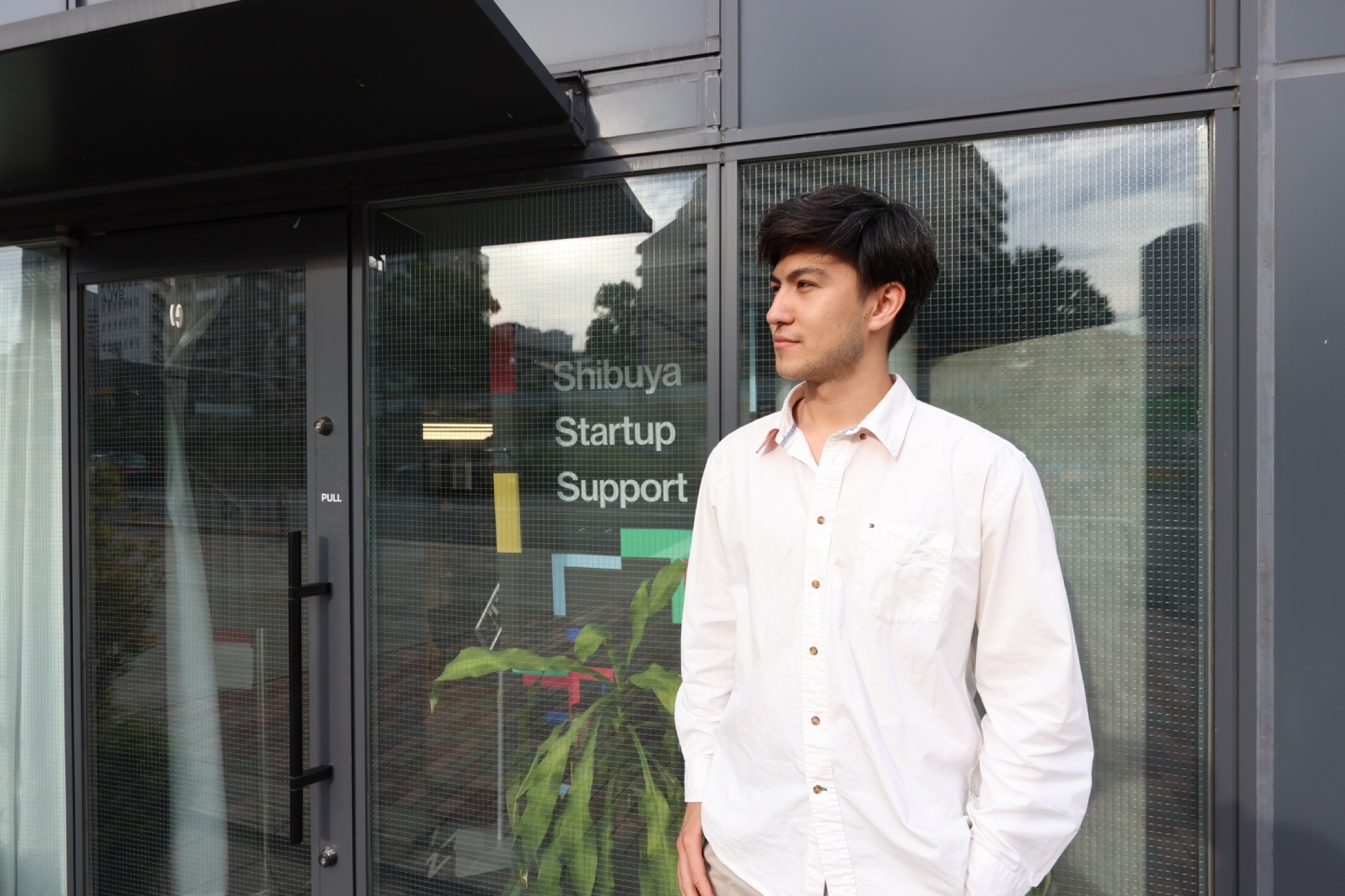
— What has been the biggest challenge you have faced while building your business in Japan?
Shaha: Honestly, the most difficult part has been sales.
For foreigners who are not familiar with Japanese business culture, B2B sales in Japan can feel particularly challenging because individual processes and client decision-making can take a significant amount of time.
Rather than simply learning “sales techniques,” I think it is more important to understand how communication and business discussions are typically conducted in Japan.
Business relationships are generally built over the long term, so you need to adjust your approach to the pace of potential clients.
— On the other hand, has there been anything about Japan that has been better than you expected?
Shaha: People often say that administrative procedures and bureaucracy in Japan are difficult, but honestly, I don’t find them that difficult. In many other countries, there are situations that can be much more complicated.
For example, in countries such as Germany, Italy, and France, when it comes to setting up a company or dealing with administrative procedures, you may not know whether the process will actually move forward or when it will be completed. The next steps and final outcome can sometimes be difficult to predict.
In Japan, as long as you complete the necessary procedures properly, things will generally move forward, even if they take time.
If you do what is required properly, things will eventually move forward. That was one of the positive aspects of starting a business in Japan that I hadn’t expected beforehand.
— How would you like to grow the business going forward?
Shaha: We are currently working on raising our seed round.
Once we secure funding, we want to expand our team, strengthen our organization so that we can grow the business, and focus on acquiring more customers.
For now, we want to focus on Japan and build a strong customer base here first. Once we have established that foundation, we plan to start expanding into new markets, including North America and Asia, in around one to two years.
— Finally, do you have any message or advice for people who are considering starting a business through SSS or launching a startup in Shibuya or Japan?
Shaha: First, for anyone starting a B2B startup like mine, I recommend learning as much as possible about Japanese business culture and how sales are conducted here. Rather than expecting immediate results, it is also important to think about growing your business from a long-term perspective.
For those considering starting a business in Japan, I would say that there are many opportunities here. Of course, there are challenges that are unique to Japan. So if you are thinking about starting a startup here, you should be aware that it will not necessarily be easy.
However, if you are truly committed and can turn your idea into a real business, I believe Japan offers tremendous potential.
— Thank you very much for sharing your story of building a company in Shibuya, your experiences with Japanese business culture as a foreign entrepreneur, and how SSS has supported you throughout your journey.
Interview & Article by Keito Okabe
Editing by SHIBUYA STARTUP SUPPORT PR Team
Shibuya Startup Support: https://shibuya-startup-support.jp/
LinkedIn: https://www.linkedin.com/company/shibuya-startup-support/
Facebook: https://www.facebook.com/shibuya.startup.support
X: http://twitter.com/ShibuyaStartup


